
By Henry Quillen
(This article was first published on graecitas.com. Note that, throughout the article, quotes from papyri are given in the original spelling.)
Modern speakers of Koine Greek have little sense for how to formulate polite requests. This is a necessary consequence of understanding Koine too much on the model of Classical Attic literature. Classical Attic does have language for polite requests, but it was much more direct than Koine, which became progressively more deferential over time. While the student of Classical Attic might therefore benefit from a certain indifference to politeness, students of Koine must be far more attentive to it than they currently are. But even though Koine expressions of politeness are numerous and often even obligatory, there are no resources that teach them accurately and practically. This post fills the pedagogical gap, outlining ways to make polite requests in Koine Greek.
Plain Imperatives
Plain imperatives are always appropriate between social equals, provided the request is not too burdensome, and in directives to someone of lower rank. Papyrological and epigraphical evidence regularly confirms this straightforward usage in brief, functional messages, which were not considered impolite on account of their disinterest in pleasantries. For example, we find the following short, sweet, and to-the-point message preserved on an ostracon:
Θέων Θαμούνει χαίρειν. δὸς τῶι παρὰ Νικάνδρου κομίζοντί σοι τὰ γράματα χα(λκοῦ) (δραχμὰς) ρ καὶ μὴ κατάσχηις αὐτόν. ἔρρωσο. (O.Strasb.1.510)
Theon to Thamounis, greetings. Give 100 drachmas to the person delivering the letter from Nicander, and do not detain him. Farewell.
ἐὰν θέλῃς + Imperative
ἐὰν θέλῃς carries roughly the same level of politeness as an English “please” in a corporate email. When genuinely used to soften a request, it adds a minimal degree of courtesy, though not much. Just as often, however, it functions as a thinly disguised imperative, wherein its presence is still more polite than its absence. For example:
μὴ οὖν ἄλλως ποιήσεις. ἐὰν δὲ θέλῃς, σύντυχε Καισαρᾶτι υἱῶι…Παποντῶ[το]ς χάριν τοῦ μόσχου, ἐπὶ καὶ αὐτὸς ἴρηχέ με ἐν[έ]νκε αὐτὸν εἰς τὸν ἀγρόν. ἐρῖς δὲ ἰς οἶκ[ον(?)] φυλάξεσθαι αὐτοὺς… (BGU.2.597=P. 6987)
…Do not do otherwise. If you wish (i.e., you will), meet with Caesaras son of Popontos for the sake of the calf, since he told me to bring it into the field. And you will say to guard them in the house (?)…
ἐὰν οὖν θέλῃς, γράψον μοι περὶ τοῦ μέρους…τοὺς τόπους ὅπου ἔμενεν Ζώσιμος. (P.Louvre.3.198)
Therefore, if you’re willing, write to me about the [side/part/portion(?)]…the places where Zosimos stayed.
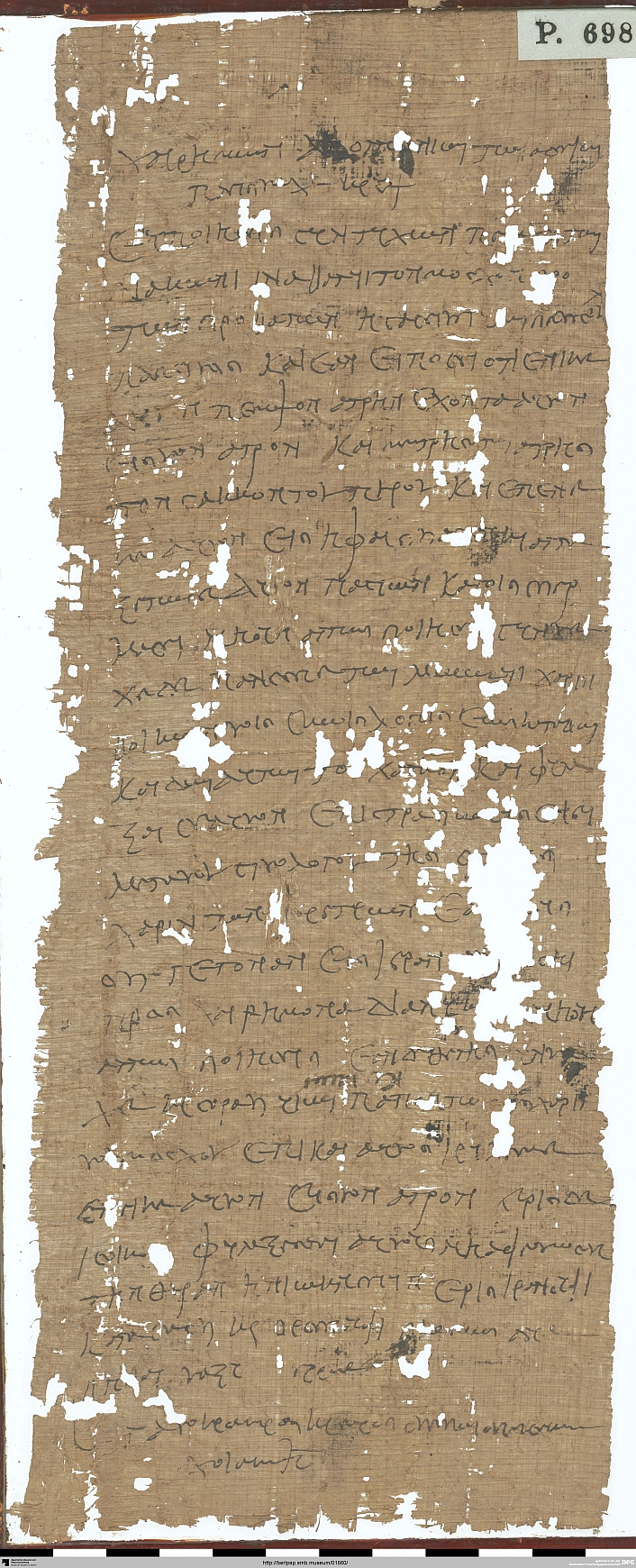
In form, at least, ἐὰν θέλῃς is the nearest equivalent to the more routine expressions of “please” or “s’il vous plaît,” for neither is a genuine invitation to refuse on the basis of your own preference. An offer of nominal but usually only nominal deference to the addressee’s agency, it works best to soften a directive that might otherwise feel too bossy – with the caveat that Ancient Greeks were generally less sensitive to this concern than twenty-first century English speakers.
καλῶς ποιήσεις / καλῶς ἂν ποιήσαις + aorist participle or imperative
This construction comes nearest to being Koine Greek’s default “please” equivalent. In the early third century B.C. the form with the optative mood is about as common as the form with the future in higher register texts, but the latter quickly predominates. The optative form consistently carries a higher level of formality, while the future form is one of the two unmarked polite request formulae in Koine. Its nearest English equivalent is a genuinely felt “please.” The construction prefers a participial complement, but can be followed by an imperative as well. Some examples:
Δημήτριος Ζήνωνι χαίρειν. ἐν τῆι Τύρωι ἀγοράσματά τινα λαβὼν ἀνήλωκα τὸ ἐφόδιον. καλῶς ἂν οὖν ποιήσαις δοὺς Νικάδαι τῶι τὰ γράμματά σοι ἀποδεδωκότι (δραχμὰς) ρν. (P.Cair.Zen.1.59016)
Demetrius to Zenon, Greetings. Having bought some goods in Tyre, I spent my entire travel allowance. Please, therefore, give 150 drachmas to Nikadas, the man who has relayed this letter to you…
Ζήνωνι χαίρειν Ψενόβαστις. εἴ σοι δοκεῖ, καλῶς ποιήσεις γράψας Παυῆι τῶι βασιλικῶι γραμματεῖ ὅπως ἂν… (P.AncSoc.45.87.1)
To Zenon, Psenobastis sends greetings. If it seems well to you, please write to Paues the royal scribe in order that…
…καὶ νῦν καλῶς ποιήσετε ἀντιφωνήσαντες ἡμῖν πρὸς ταῦτα. (1 Macc. 12:18)
…and now please send us a reply regarding these things.
παρακαλῶ + infinitive or imperative
παρακαλῶ may be the only Koine “please” equivalent with clear precedent in literary Attic (Lysias 32:10). It only became more common over time, and is the preferred way to express “please” in the New Testament, where translators often translate it as “urge” or “exhort,” obscuring its pragmatic force. It is one of the two unmarked polite request formulae in Koine, along with καλῶς ποιήσεις. Some examples:
καλῶς ἂν οὖν ποήσαις̣ συνεπιλαμβανόμενος αὐτοῦ ἐάν σε παρακαλῆι. τοῦτο δὲ ποιῶν χαρίζοιʼ ἂν καὶ ἐμοὶ καὶ τῶι θεῶι. (P.Zen.Pestm.42)
Please, then, assist him if he should ask [/beseech/say please]. Doing this, you would gratify both me and the god.
…διὰ τὴν ἀγάπην μᾶλλον παρακαλῶ, τοιοῦτος ὢν ὡς Παῦλος πρεσβύτης, νυνὶ δὲ καὶ δέσμιος Χριστοῦ Ἰησοῦ – παρακαλῶ σε περὶ τοῦ ἐμοῦ τέκνου, ὃν ἐγέννησα ἐν τοῖς δεσμοῖς Ὀνήσιμον… (Phil. 9-10)
…rather on account of love, please, I being as I am – Paul the elderly, and now also a prisoner of Jesus Christ – I say to you please, on account of my child, whom I begat in my bonds, Onesimus…
διὸ παρακαλῶ ὑμᾶς μεταλαβεῖν τροφῆς, τοῦτο γὰρ πρὸς τῆς ὑμετέρας σωτηρίας ὑπάρχει… (Acts 27:34)
please have a share of this meal, for it is for your salvation…
ἀξιωθείς (+ imperative)
ἀξιόω – but only in the aorist passive participle – can function as a polite marker meaning “having been asked politely,” from which developed a second sense meaning “please.” The first usage is the more common, and it is especially useful for following up on earlier requests. For example:
Ζήνωνι χαίρειν Πύρων. καλῶς ποιήσεις, καθὰ καὶ προσεφώνησας ἀξιωθεὶς καὶ ὡμολόγησας πᾶν τὸ δυνατὸν ποιήσειν, φροντίσας ὅπως τό τε παιδίον ἱματισθῆι καὶ εἰς τὸ παλαιστρίδιον ἀποστέλληται. (PSI.4.418)
To Zenon, Pyro sends greetings. Please – like you said before when you were politely asked and agreed to do everything in your power – give heed that my child be clothed and be sent to the palaistra.
ἐρωτηθείς (+ imperative)
ἐρωτάω is used like ἀξιόω, and has the same range of meaning when used as an aorist passive participle. For this verb, the sense meaning “please” is more common. Beginning in the Augustan period, it becomes the more common of the two.
σὺ δὲ φίλτατε ἐρωτηθεὶς γράφε ἡμεῖν ὑπὲρ ὧν ἐὰν αἱρῆις (BGU.16.2636)
And you, most dear friend, please write to us about whatever you choose.
εἴ σοι δοκεῖ
While there is some evidence to suggest that this expression was used for minor hedging in Classical Attic, in Koine expressions of polite request, it occurs primarily, if not exclusively, in appeals to authorities and social superiors. It corresponds to such English expressions as “if it please the crown,” or “may it please the court.” For example:
δέομαι οὖν σου, βασιλεῦ, εἴ σοι δοκεῖ, προστάξαι Ἀφθονήτωι τῶι στρατηγῶι γράψαι οἷς καθήκει ταῦτα ἐπισκέψασθαι… (APF. 62. 398r) (Addressed to King Ptolemy)
I pray that, if it please the crown, you will order Aphthonetus [strategus of Arsinoite nome] to write to whomever it is appropriate to investigate… [a quarrel in a “little beer shop in Memphis”]
καὶ εἶπεν Εσθηρ εἰ δοκεῖ σοι καὶ εὗρον χάριν, πεμφθήτω ἀποστραφῆναι τὰ γράμματα τὰ ἀπεσταλμένα ὑπὸ Αμαν τὰ γραφέντα ἀπολέσθαι τοὺς Ιουδαίους, οἵ εἰσιν ἐν τῇ βασιλείᾳ σου. (LXX Esther 8:5) (Addressed to King Artaxerxes)
And Esther said, “If it pleases the crown and I have found favor with you, let an order be sent that Haman’s letters ordering the destruction of the Jews in your kingdom be recalled.”
“Laying it on Thick” The Case of Asclepiades’ Letter to Horion the Centurion
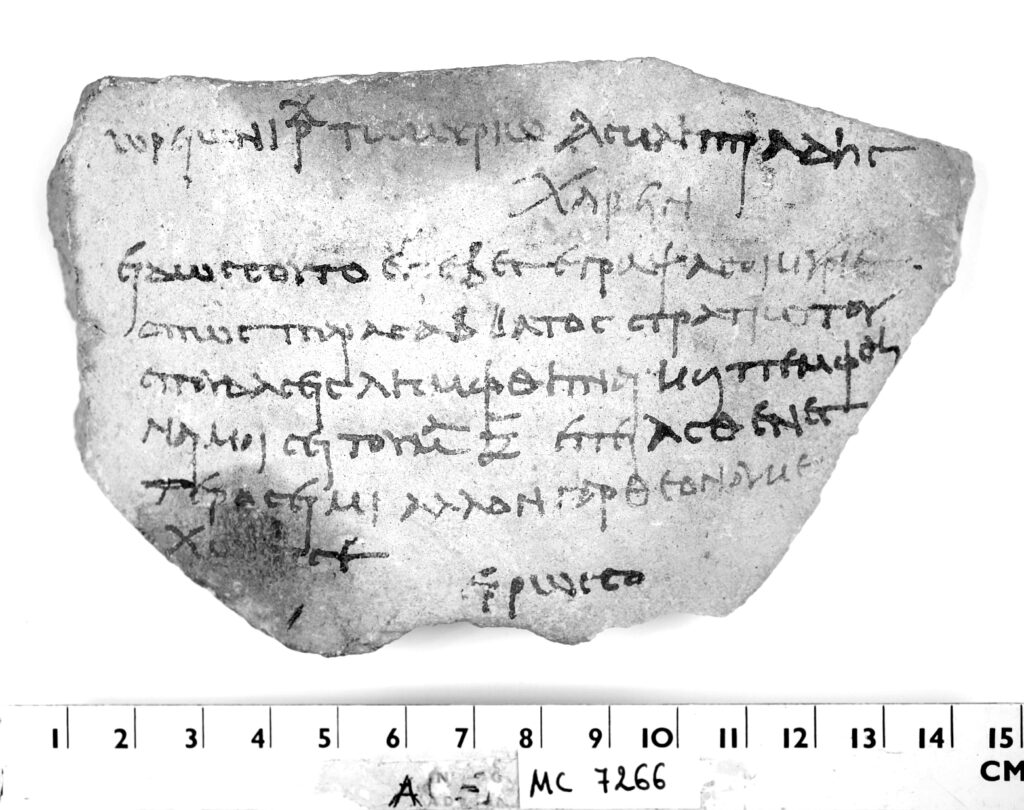
Maximal deference sometimes depends on combining multiple polite strategies—some conventional, others idiosyncratic. Asclepiades’ letter to Horion the centurion, preserved on an ostracon, is a textbook example of how this works.
Ὡρείωνι (κεντυρίωνι) τῷ κυρίῳ Ἀσκληπιάδης χαίρειν. εἰδώς σου τὸ εὐσεβές, ἔγραψά σοι, κύριε, ὅπως παρὰ Σαββᾶτος στρατιώτου σπουδάσεις λημφθῆναι καὶ πεμφθῆναί μοι σείτου μά(τια) ζ ἐπεὶ ἀσθενέστερός εἰμι. ἄλλον γὰρ θεὸν οὐκ ἔχω ἢ σέ. ἔρρωσσο. (O.Claud. 2.286)
To Sir Horion the Centurion, Asclepiades sends greetings. Knowing thy piety, I have written to thee, sir, that you might hasten that seven matia of grain be received by the soldier Sabbas and sent to me, because I am very weak. For I have no other god but you. Farewell.
Several distinct elements are operating here simultaneously:
First, κύριος as “sir.” By the Roman period, this usage is incredibly common. Between social equals, it carries roughly the force of “sir” or “ma’am” in Southern American English. From a subordinate to a superior, however, it marks explicit recognition of difference in rank and adds an extra element of deference beyond neutral address.
Secondly, Greek epistolary addresses generally prefer the sender’s name before the recipient’s. Reversing the order in a situation of unequal rank is not obligatory, but reliably signals deference when employed. The gesture is small, but in conjunction with others can accumulate perceptibly.
Thirdly, the general tenor of the author’s word choices and ordering are formal: εἰδώς σου τὸ εὐσεβές instead of εἰδὼς τὸ εὐσεβές σου, ἔγραψά σοι instead of ἔγραψα πρός σε (the dative was in decline at this time), κύριε, and ὅπως instead of ἵνα all contribute to a powerful cumulative effect.
Fourth, the request itself is maximally indirect. Asclepiades does not say “please have seven matia of grain taken and sent to me.” Instead, he says, “I have written to you in order that you might hasten that seven matia of grain be taken and sent.” The act requested is buried inside a purpose clause subordinate to the act of writing itself. This is deference by syntactic distance: the further the request is from an imperative core, the less liable to cause offense it becomes.
Finally, the letter closes with the incredible line ἄλλον γὰρ θεὸν οὐκ ἔχω. The effect of this is clear. We’d like to believe that this sort of calculated hyperbolic expression of dependence was regularly employed, but it doesn’t seem to have been. Nonetheless, it’s an attested possibility.
Taken together, these elements show how extreme politeness in Koine Greek is achieved not by any single feature or expression, but by cumulative effect. While this level of deference was probably reserved for exceptional circumstances, it is difficult to imagine that the letter failed to achieve its intended effect.
Summary
Polite requests in Koine Greek are pretty straightforward. Sometimes it really is a matter of choosing the right single word; at other times it depends on choosing the right construction, or on layering multiple small signals of deference. Ostraca, papyri, inscriptions, and literary texts show how requests were shaped to fit rank, relationships, and circumstances, using forms whose force was clearly felt and understood. Anyone attempting to speak reconstructed Koine needs to acquire that same pragmatic sensitivity.
Bibliography
Leiwo, Martti. “Imperatives and Other Directives in the Greek Letters from Mons Claudianus.” In The Language of the Papyri, 97-119. Edited by Trevor V. Evans and Dirk D. Obbink. New York, NY: Oxford University Press, 2010.
About the Author
Henry Quillen is an independent scholar and full-time stay-at-home dad from Texas. His work centers on how Ancient Greek was spoken, written, and read as it evolved over time, with particular attention to evolving standards of usage, register, and style. He’s especially interested in what non-literary texts reveal about the language of Greek literature, and in what literary papyri, codices, and ancient literary critics reveal about elocution. He maintains a blog, Graecitas, where he posts medium-form essays about his research.